
Article: Preparing for the Grind: What 80 Hours in a Saddle Taught Me About Comfort and Versatility

Preparing for the Grind: What 80 Hours in a Saddle Taught Me About Comfort and Versatility
By Alex Rewa | Brand Experience Manager, Hunt Arsenal
As we head into the part of whitetail season where sits get longer, temperatures drop, and comfort becomes more important than ever, I wanted to share a few things I learned while chasing my first black bear with a bow.
This year, I spent two weeks hunting black bears in Ontario, Canada—one week in the spring and another in the fall. Between the two trips, I logged 16 hunts and nearly 80 hours in the saddle, with sits typically lasting four to six hours. Conditions ranged from temperatures in the mid-80s during the spring to the low 50s in the fall.
Throughout those hunts, I put a lot of gear to the test, adjusted my setups, and learned what worked best for staying comfortable and effective during long hours in the tree.
And as we head into the rut, a lot of those lessons apply directly to whitetail hunting.
Finding the Right Setup
Most of the bait sites we hunted were equipped with short ladder stands, making them accessible to hunters of all ages and abilities. While convenient, these stands presented a few challenges: limited cover, bears that were familiar with the setups, and less-than-ideal filming angles.
I opted to build my own saddle setups at each location, allowing me to take advantage of smaller trees, better cover, and more effective hunting and filming positions.
In total, I hunted six different locations and seven different trees, with all but one being preset ahead of time. As the hunts progressed, I continued fine-tuning my setups to maximize comfort, concealment, and versatility.
By the end of the two weeks, I had a pretty good idea of what my ideal setup looked like.
The Gear That Made the Difference
Cloud Freedom Saddle
I hunted out of the Cloud Freedom for all but one sit. Simply put, the comfort and support of this saddle are hard to beat.
When you're spending upwards of six hours in a tree, the ability to make small adjustments throughout the hunt makes a massive difference. As my body became stiff or pressure started building in certain areas, I could easily adjust the saddle to redistribute that pressure and find a more comfortable position.
The integrated back support was another huge advantage, allowing me to lean back, relieve pressure, and stay comfortable without constantly shifting around.
GLYDE Tether + Safe Grip Tether Handle
Every setup was equipped with a GLYDE tether and Safe Grip Tether Handle. The combination made adjustments throughout the hunt extremely easy and controlled.
Being able to quickly fine-tune my tether height and position without fighting my equipment was something I really appreciated, especially as the hours started adding up.
RZR Elite & MAG3 Platforms
For these hunts, I found myself preferring a larger platform.
Could I have gotten away with a SUB2? Absolutely. But with sits lasting four to six hours, I appreciated the extra room to stand, turn, stretch, and shift my weight.
The Elite and MAG3 gave me that additional freedom of movement without sacrificing the mobility and versatility that make saddle hunting so effective.
Neo SlingR
This might have been the single most important comfort accessory of the entire trip.
Being able to slide the SlingR into position, sit down, and take pressure off my feet and knees was a game changer during long sits.
In fact, I forgot my SlingR on one hunt, and let's just say it made for a LONG afternoon.
It's one of those pieces of gear that might seem like a small addition to your setup, but after hours in the tree, you'll be glad you have it.
ICON X20 & CarbonLITE Climbing Sticks
I used both the ICON X20s and CarbonLITEs throughout the hunts, each serving a slightly different purpose.
I tended to use the ICONs in locations I knew I'd be hunting repeatedly, while keeping the CarbonLITEs available for moving into new spots and making adjustments as the weeks progressed.
Both systems worked extremely well, and having the ability to adapt my climbing setup to the situation was a major advantage.
ADVENTURE Pack
Long sits meant bringing plenty of gear. Snacks, drinks, extra layers, and a full camera setup all needed to make it into the tree.
The ADVENTURE Pack became my go-to for hauling everything I needed. Its organization and storage made it easy to keep my equipment accessible without digging through a pile of gear every time I needed something.
The Hunt: When Versatility Made All the Difference
All of that gear testing eventually came together during one hunt that I'll never forget.
On Tuesday of my fall trip, I was climbing down from an evening sit when a big boar caught me halfway down the tree.
Busted.
I had a pretty good feeling he'd be back, but I also knew there was a good chance he'd be watching that tree the next time he approached the bait.
So I decided to get aggressive.
The following hunt, I moved into a new tree much closer to the bait, buried deep in the cover. Getting into position literally required climbing through a jack pine that was leaning into another tree.
I tucked my RZR Elite platform into a small opening in the tree, giving myself one narrow shooting window toward the bait.
It was the kind of setup that would have been nearly impossible with a traditional treestand. Placing a stand in that tree would have required removing the very cover that made the location so effective.
Instead, I was able to stay concealed behind the trunk and surrounding pine branches, with just enough room to lean out and make a shot when the opportunity presented itself.
The setup was absolutely killer.
And on hunt number 16, it paid off.
Shortly after 5 o'clock, that big boar came strolling back in. As he approached, I watched him check the tree where he'd busted me the previous evening.
But this time, I wasn't there.
Hidden in my new saddle setup, I watched as he cautiously worked his way into the bait.
What followed was a 35-minute showdown.
For over half an hour, I came to full draw and let down nearly 20 times, waiting for the right shot opportunity. Every time I thought I had him, something changed.
Eventually, the bear got uneasy and started making his way out of the bait site.
I knew I was running out of time.
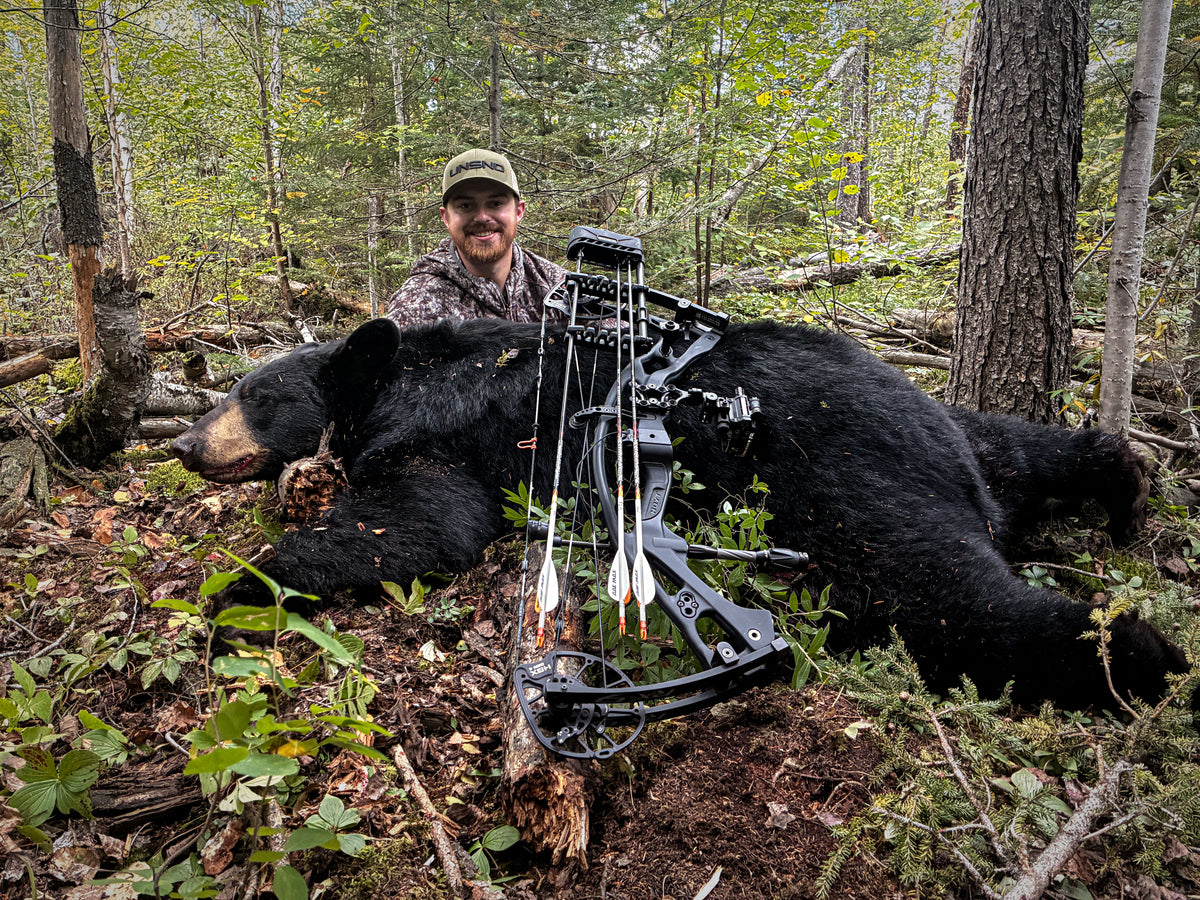
I quickly bent my knees and dropped lower in my saddle, swinging underneath a branch that had been blocking my shooting lane. I settled into position, stopped the bear, and sent an arrow.
The shot was true.
Thirty minutes later, I was dragging my first black bear out of an Ontario pine swamp.
Looking back, that entire hunt came down to one thing: the ability to adapt.
The tree, the cover, the shooting angle, and ultimately the shot itself would not have been possible with a traditional treestand in that location.
That freedom to make an aggressive move, get into an unconventional tree, and adjust my position when the moment mattered is exactly why I saddle hunt.
What This Means for the Whitetail Rut
As we head into the rut, there are a few things from those two weeks that really stand out.
Comfort matters. When you're planning to spend six, eight, or even ten hours in a tree, the little things add up. Pressure points, sore knees, and constantly shifting around can turn a great hunt into a miserable one.
After nearly 80 hours in the saddle, my preferred setup for extended sits is the Cloud Freedom, a larger platform like the Elite or MAG3, a GLYDE tether with Safe Grip Tether Handle, and the Neo SlingR.
That combination gave me the support, adjustability, and freedom of movement I needed to stay comfortable throughout long hunts.
Versatility matters just as much.
During the rut, things change fast. A buck might shift his travel pattern, a new scrape might appear, or you might find yourself needing to make an aggressive move into a tree you've never hunted before.
Having equipment that allows you to adapt to those situations can be the difference between watching a deer walk out of range and putting yourself in position for a shot.
And finally, confidence in your setup matters.
The less time you spend fighting discomfort or worrying about your equipment, the more time you can spend focused on what's happening in the woods.
That's ultimately what I took away from my bear hunts. I wasn't just testing gear. I was figuring out how to build a system that allowed me to hunt longer, move more effectively, and capitalize on opportunities when they presented themselves.
As the rut approaches and the long sits begin, hopefully some of these lessons help you dial in your own setup.
Get comfortable. Stay mobile. Be ready to adapt.
Good luck out there this fall.
— Alex Rewa
Brand Experience Manager | Hunt Arsenal